
Incident response is still too manual
Modern engineering team can detect production failure in seconds . Scrubbe turns that investigation into a governed autonomous response process
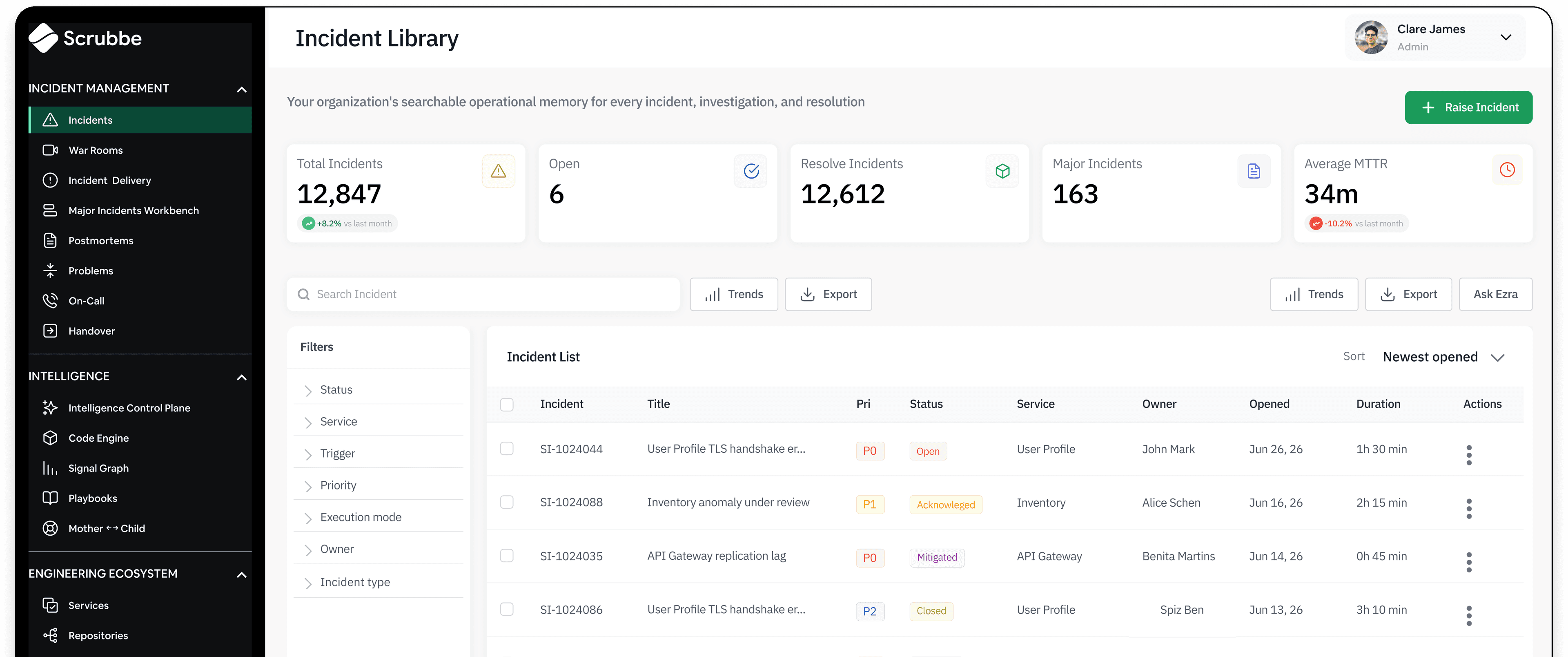
The real cost begins after the alert
When production breaks, engineers still have to determine what changed, where the failure originated, which systems are affected, what evidence matters, and what action is safe to take. That often means moving between logs, code, deployments, infrastructure, monitoring and service dependencies while the incident is already affecting customers.
A production incident rarely belongs to one system. A deployment may trigger an infrastructure problem. A configuration change may expose a dependency failure. A seemingly isolated error may be the result of several changes occurring across the stack.
Detection has become automated. Investigation and remediation have not.
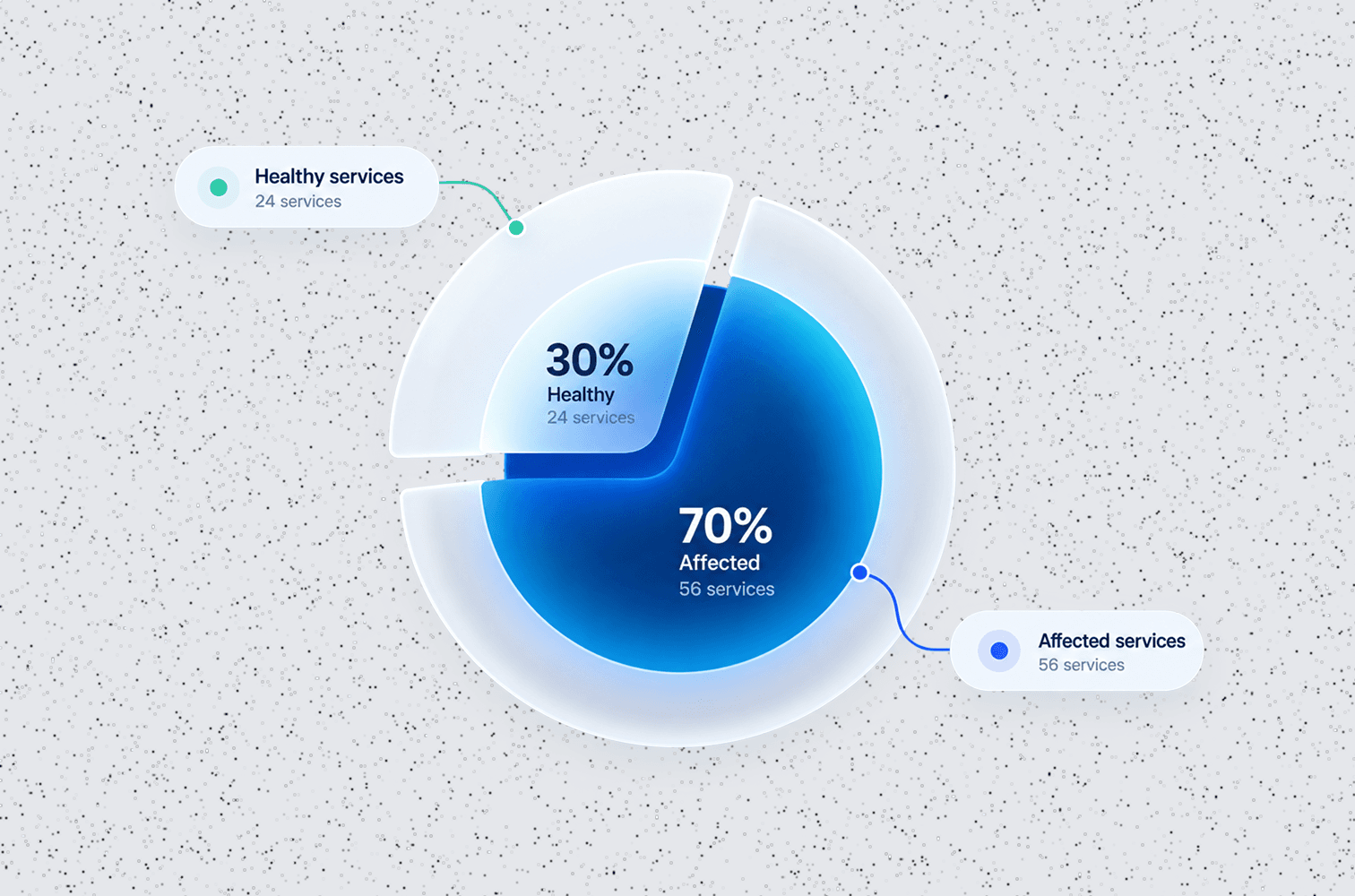
The investigation gap
The technology around the incident is sophisticated. Observability systems provide more signals. Ci/cd systems provide more history. Infrastructure platforms expose more state. Yet connecting those signals into a coherent explanation still depends heavily on human investigation.
The result is a familiar pattern: an alert arrives, engineers gather, systems are searched, hypotheses are formed, changes are reviewed, and a remediation is eventually agreed upon.
Current Model

Scrubbe changes the role of the engineer
Scrubbe brings autonomous investigation and remediation into the incident response process. When an incident occurs, Scrubbe investigates the systems involved, correlates the available evidence, identifies the most likely cause and determines the safest remediation.
The goal is not to give engineers another dashboard to watch. It is to remove the investigative work that consumes their time while preserving their authority over consequential decisions.
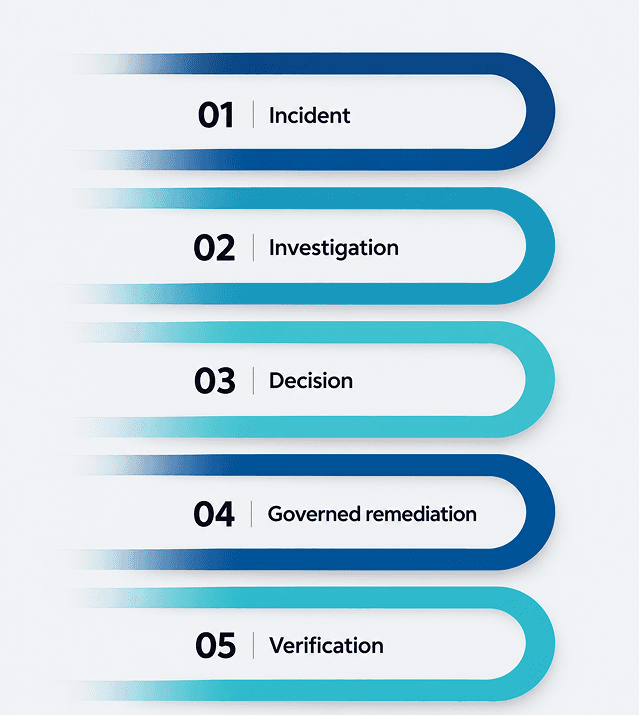
Autonomy requires control
Production systems cannot be operated on the assumption that every Ai decision should be executed automatically. The right model is governed autonomy.
Scrubbe evaluates proposed remediation against the policies, permissions and risk boundaries defined by the organization. Depending on the situation, an action can be executed, require approval, or be blocked.
This creates a different relationship between Ai and production systems. The objective is not unrestricted automation. It is controlled autonomy with accountability.

Recovery is more than applying a fix
A remediation is only successful if the system actually recovers. Scrubbe verifies the expected impact of an action and continues the investigation when the outcome does not match expectations.
That closes the loop between diagnosis and recovery. Instead of treating execution as the end of an incident, Scrubbe treats recovery as something that must be demonstrated.
- Investigate
- Decide
- Remediate
- Verify
The next generation of incident response
Engineering teams have spent years automating how software is built, tested, deployed and monitored. The next step is automating more of what happens when those systems fail.
That does not mean removing engineers from production operations. It means moving engineers away from repetitive investigation and toward the decisions that actually require human judgment: defining policies, setting risk boundaries, designing systems and deciding where autonomy should stop.

Cookie preferences
We use essential cookies to keep Scrubbe secure and functional. You can choose whether to allow analytics, preferences, and marketing cookies, and update your choices at any time.
Essential cookies
Required for security, session continuity, consent state, and core site functionality. These are always on.
Analytics cookies
Help us understand usage patterns so we can improve product pages, onboarding paths, and documentation quality.
Preference cookies
Remember selected settings such as region, UI preferences, and previously chosen site options.
Marketing cookies
Enable campaign measurement and more relevant follow-up communications across trusted channels.
Your choices are stored locally in this browser and can be updated at any time from the cookie settings button.